Whispers in Sandstone : Why Datong Should Be on Your China Itinerary
Less than two hours by bullet train from Beijing, nestled in northern Shanxi Province, Datong is often overlooked on the well-trodden route between Beijing and Xi’an. But for those who venture into its folds, the city unveils a dramatic blend of imperial ambition, Buddhist artistry, and urban transformation.
Recently it has been featured as the setting for Black Myth: Wukong, a video game set in this mysterious city.
Once a strategic outpost along the Great Wall, Datong today invites travellers to trace the arc of Chinese civilization etched into its cliffs, temples, and revitalized cityscape.
It was definitely the highlight of our second trip to China.
🌄 Where Stone Speaks: The Yungang Grottoes
Begin with awe.
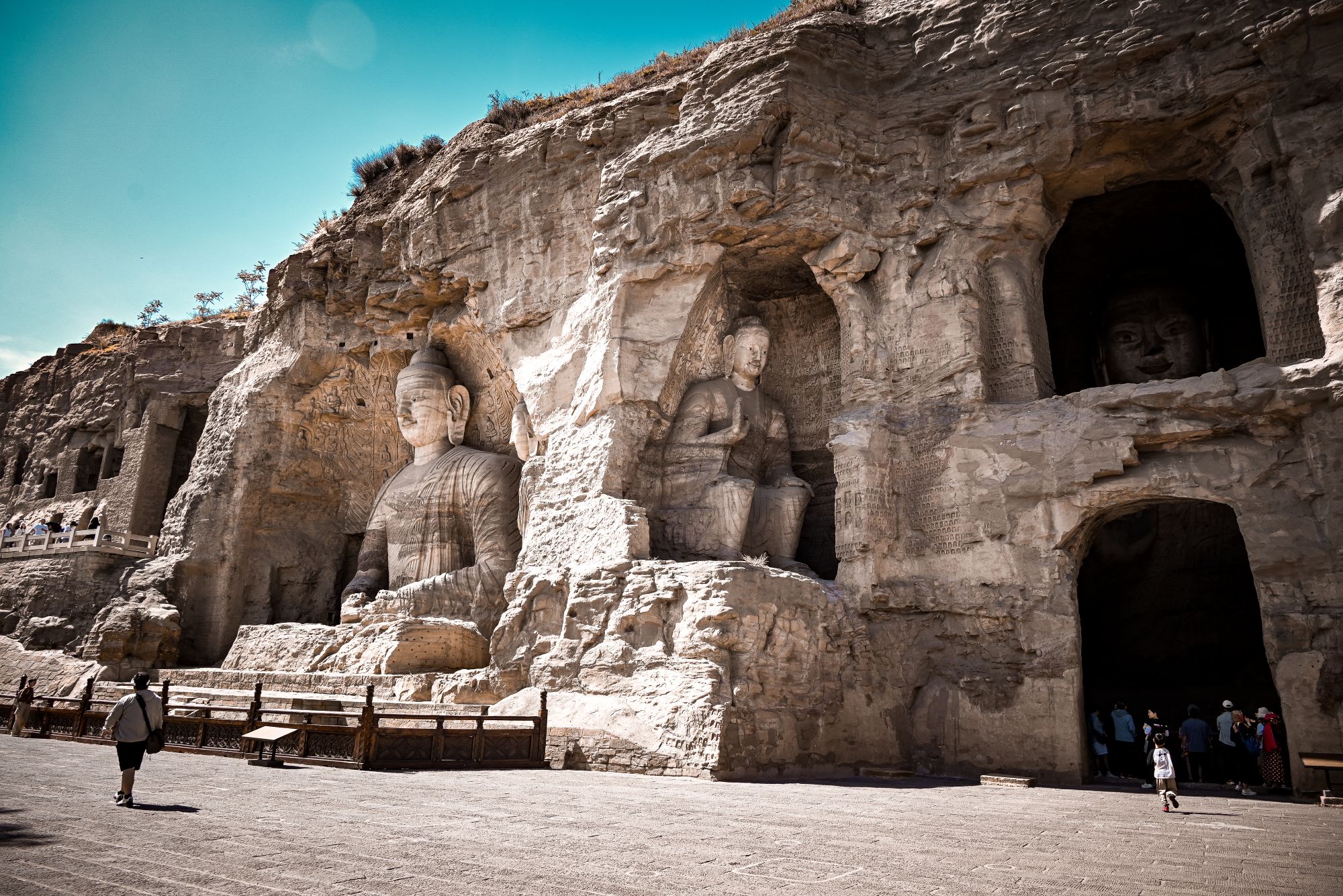
The Yungang Grottoes, a UNESCO World Heritage Site, are an astonishing complex of over 50,000 statues carved into sandstone caves. Not all have been preserved by time and not all are open to the public. Carved into the sandstone cliffs near Datong during the Northern Wei Dynasty (circa 460–525 AD), the Yungang Grottoes are among China’s earliest and most majestic Buddhist cave complexes. With over 250 caves and more than 51,000 statues, they represent a monumental fusion of Chinese, Central Asian, and Indian artistic traditions.

The Northern Wei rulers, originally nomadic Xianbei people, adopted Buddhism as the state religion. The grottoes were a political and spiritual statement—meant to legitimize their rule and showcase their devotion. The earliest caves (like Caves 16–20) were commissioned by the court and feature colossal Buddhas seated in serene meditation, surrounded by celestial musicians and dancers.

I entered every grotto with curiosity and exited with “wows” and humbleness. Photos do not do it justice.
The Yungang Grottoes are open daily, with seasonal hours:
- 🕣 April to October: 8:30 AM – 5:30 PM
- 🕣 November to March: 8:30 AM – 5:00 PM
- 🎟️ Ticket sales end 30 minutes before closing


If you’re planning a visit, arriving early is ideal—not just for the soft morning light, but also to beat the crowds and enjoy the serenity of the site.
Getting there is easy with inexpensive DIDI taxis.
Insider tip: Visit early in the morning for softer light and quieter paths—ideal for photos and reflective moments.
🏯 Huayan Monastery: A Liao Dynasty Legacy
Founded in 1038 AD during the Liao Dynasty, Huayan Monastery was originally a royal temple, closed to the public and reserved for imperial worship. Its name comes from the Huayan Sutra, a key Mahayana Buddhist text emphasizing interconnectedness and cosmic harmony.


The monastery is split into two distinct sections:
- Upper Huayan Monastery: Home to the Mahavira Hall, which houses five large Ming Dynasty Buddha statues and stunning Qing-era murals.
- Lower Huayan Monastery: Features the Sutra Hall, with 38 intricately carved cabinets holding over 18,000 volumes of Buddhist scriptures.

🕰️ Visiting Info
- Opening Hours: 8:00 AM – 5:00 PM daily
- Admission: Around ¥50 (CNY)
- Location: Daxi Street, southwest Datong
- Transport: Public Bus 18 or a short DIDI taxi ride from downtown
🏯 Shanhua Temple: Tang-Era Tranquility in the Heart of Datong
Originally founded during the Tang Dynasty (618–907) and later rebuilt in the Jin Dynasty (1115–1234), Shanhua Temple is one of the most intact examples of Liao and Jin dynasty architecture still standing in China. Its layout, aligned along a central axis, reflects traditional Chinese temple design and offers a serene counterpoint to Datong’s more bustling sites.

Unlike the more tour-heavy Huayan Monastery, Shanhua Temple offers a peaceful, contemplative environment. Visitors often praise its well-preserved structures, English signage, and hidden photo spots like the copper-basement pagoda.


🕰️ Visiting Info
- Hours: 8:00 AM – 5:00 PM daily
- Admission: Free with QR code registration
🏙️ Old Meets New: Downtown Datong & Regeneration
The mayor who spearheaded the urban revival in Datong, was Geng Yanbo. He served as mayor from 2008 to 2013 and is known for his ambitious project to transform the city from a coal-dependent industrial centre into a cultural tourism destination by restoring its historical sites and ancient architecture.

The government’s ambitious renovation project has reimagined the old town with pedestrian-friendly streets, heritage-style buildings, and new cultural spaces.


The transformation is astonishing and Datong is destined to become a lead player in Northen China tourism. There are an incredible array of shops, cafes, restaurants, blending an extraordinary mix of ancient and modern.


Don’t miss Fenglinge restaurant, the most popular in Datong.
Not only his setting are beautiful, but the food is gorgeously presented and delicious. Many vegetarian options (yeah!). Don’t forget to try Datong’s Shaomai, like a baozi but with a fringe on top. Vegetarian version available (and yummy).


There is no need to book in advance; once you get there, you will be given a number and wait for your turn. It is very popular. We waited for 10/ 15 minutes which was not too bad. Prices are surprisingly low.
Datong is really an undiscovered jewel, but it won’t be long before this city will become a lot more popular with international travellers. It certainly deserves it.
More about our trip to China: https://blog.worldswithout.net/asia/china/
Tours to Datong: https://www.getyourguide.com/datong-l2158/