Sinaia: more than Peleș Castle
While most tourists stay in Brasov, we decided to hop off the tourist trail and spend two days in Sinaia.
Sinaia is known as “the Carpathian Pearl,” and it’s a lovely mountain town whose main attractions are castles, hilly activities like hiking and skiing in the winter, and a 17th-century monastery that is still inhabited by nuns today.
Getting There
Sinaia is conveniently located about 100 kilometers north of Bucharest, making it easily accessible by train or car.
The scenic route through the mountains is a delightful prelude to your adventure, with sweeping views of lush forests and towering peaks
For booking your railway tickets in advance: https://www.cfrcalatori.ro/en/
We found that it is quite popular with Romanian families escaping the Bucharest summer heat and it is a family oriented place.
If you are looking for partying, this is not it.
Sinaia has several beautiful old Transylvanian style houses converted in hotels, a good number of good restaurants and cafes and a lot of things to see!
Bear in mind that, although it is very warm in the summer during the day, at night it gets quite chilly!

The main centre of Sinaia is the park where the Sinaia casino stands.
The casino is a must visit. It is a very beautiful place, built at the beginning of the19th century as per the plans of the Romanian architect Antonescu. The theatre is opulent and grand and so are the Mirrors Room and the Baccarat Room. A secret underground passage of 70 m connects the Casino with the Hotel Palace, which at the moment is closed to the public. It seems that the secret passage was built to guarantee the players’ privacy.


From the casino, it is a 10 min walk to Sinaia monastery, open from 8am to 8pm.
Built in the 17th century, this serene spot is perfect for reflection and offers a glimpse into the spiritual heritage of the region.
The monastery and the Old Church were built in 1695 by Prince Mihai Cantacuzino after his trip to Jerusalem and named Sinaia in memory of Mount Sinai. Located among the dense forest of the Carpathians, the Old Church was built in the authentic ‘Brancovenesc’ style, a local Romanian architectural style from the 17th century and the early 18th century. The old church still preserves the original frescoes.


The New Church dates back to 1846. It is the oldest monument in Sinaia and one of the most important religious monuments in Southern Romania.
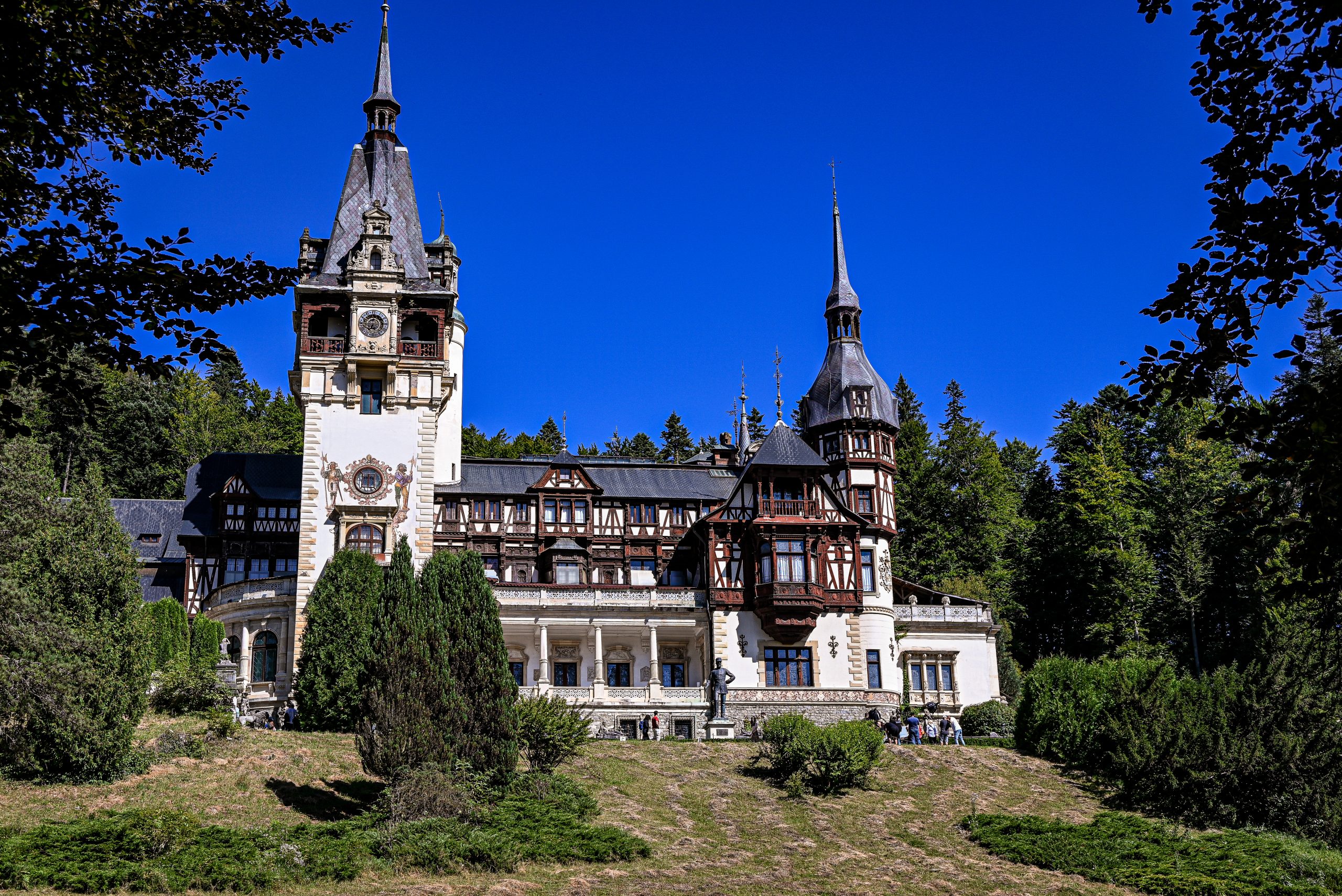
But the main attraction in Sinaia is, without any doubt, the extraordinary and magnificent Peleș castle.
Located on the outskirts of Sinaia, surrounded by the beautiful Carpathians forest, it was built between 1873 and 1914. Its inauguration was held in 1883. It was constructed for King Carol I of Romania.
This neo-Renaissance masterpiece, once the summer residence of the Romanian royal family, is a marvel of architectural beauty, adorned with intricate wood carvings and opulent decor.


Peleș Castle has a 3,200-square-metre (34,000 sq ft) floor plan with over 170 rooms, many with dedicated themes from world cultures or by style (Florentine, Turkish, Moorish, French, Imperial); all the rooms are lavishly furnished and decorated to the slightest detail. There are 30 bathrooms. It houses a collections of statues, paintings, furniture, arms and armour, gold, silver, stained glass, ivory, porcelain, tapestries and rugs. The collection of arms and armour has over 4,000 pieces, divided between Eastern and Western war pieces.


The gardens also host fountains, urns, stairways, guarding lions, marble paths and other decorative pieces.
It is, undoubtedly, one of the most magnificent castles I have ever seen.
It is highly recommended to book tickets in advance, or join the rather long queue to purchase one from the on-site ticket booth- cash only; there is an ATM machine on site.
Usually open from 9.15 to 16.15, it is closed on Mondays. Guided tours are available, allowing you to immerse yourself in the history and grandeur of the castle.
A short taxi drive away, but also walkable, will bring you to little Peleș, or Pelișor Castle. It is not as grand as its famous brother but, if you have time, it is worth a visit. The Golden Room alone is worth stepping in. The only draw back is that many rooms are not open to the public, but sure it is the same with Peleș.
A 10 mins train journey away, or a 10 mins cheap taxi drive away in the neaby town of Busteni, is the castle of Cantacuzino, reflecting the taste and ambitions of its owner, Gheorghe Grigore Cantacuzino, the richest man in Romania in the early 20th century.

It was built in the neo-Romanian style in 1911, in the middle of nature in a perfect place at the foot of the Zamora Mountains where vast forests begin, overlooking the majestic Bucegi Mountains and perfectly cradled by the Carpathian Mountains.
The view over the mountains is truly stunning!

Once you step inside, you are swept away by the romantic atmosphere and the exquisite details, like the Murano glass windows, adorned with portraits of family ancestors, and the grandiosity of the ballroom.
A great example of the Neo-Romanian style, an original mix of Byzantine, late Italian Renaissance, Oriental and local peasant and ‘Brancovenesc’ style elements, It is decorated with expensive and rare materials.


Our next stop: hop on the train to Brasov.