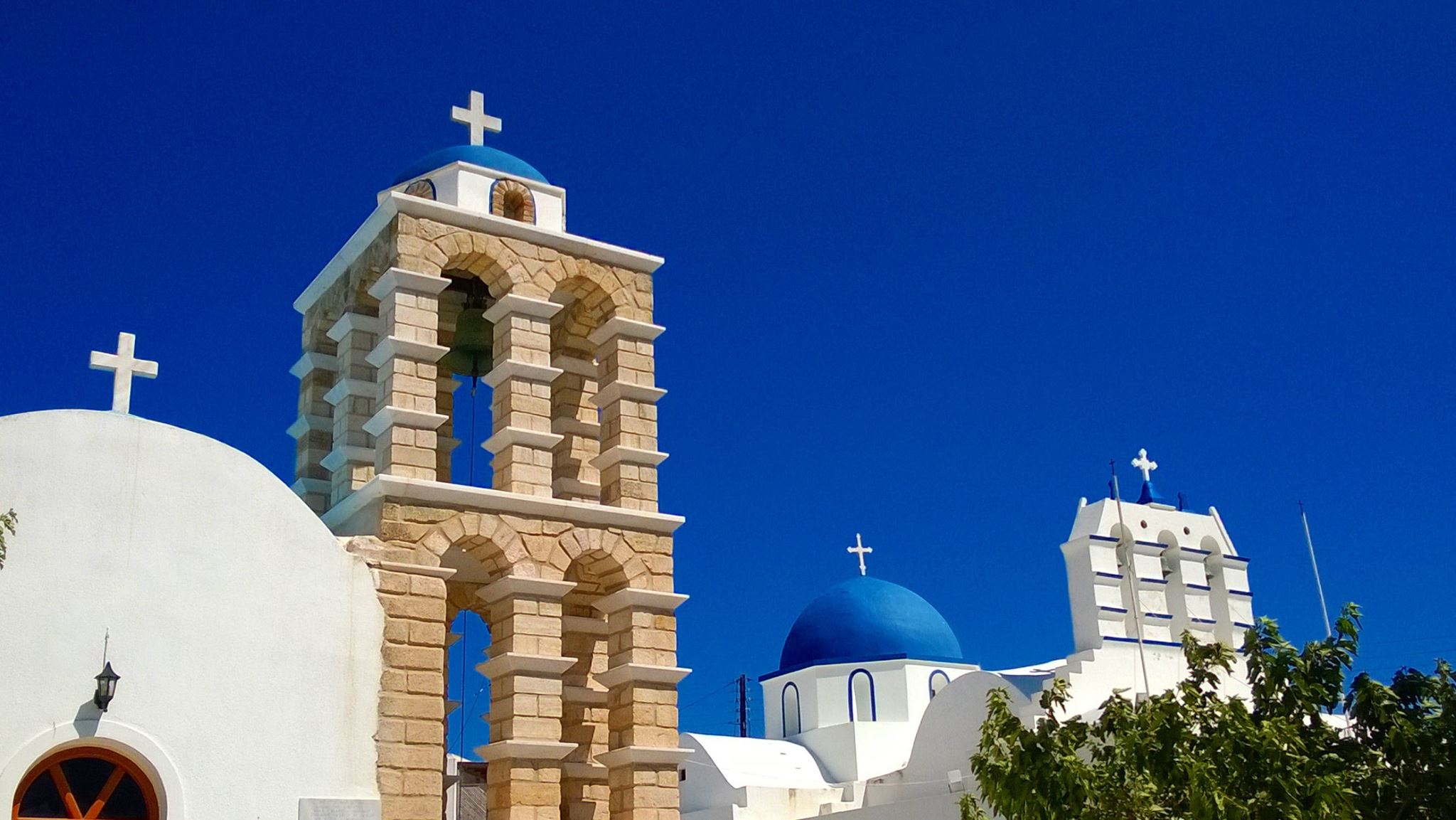
The four iconic Cyclades: Mykonos, Paros, Naxos and Santorini
Oh the Greek islands. Thousands of them and you don’t know where to start from.
Here is a guide to the four most iconic Cycladic islands.
Yes, they are popular, likely crowded, but they are still stunning and worth visiting.
I love all of them!
When we visited, we landed in Mykonos from the UK, island-hopped to Paros and Naxos by ferry and exited via flight from Santorini.
It is an easy and stunning circuit!


Mykonos
Mykonos is definitely a gem in the Cyclades and it offers the quintessential white Cycladic feeling, vibrant nightlife and history.
Today it is renowned as a party island, but there is so much more than that.
How to get there
By Air
Mykonos has an international airport (JMK) with direct flights from major European cities like London, Paris, Milan, and Athens. If you’re starting farther away, you’ll likely need to connect through Athens International Airport (ATH) or another European hub.
By Sea
If you’re already in Greece or another nearby country, ferries are a popular option. From Athens, you can take a ferry from Piraeus Port or Rafina Port. There are high-speed ferries (about 2.5 hours) or slower conventional ferries (4–5 hours). The island is also well connected to other Cyclades islands like Santorini, Naxos, and Paros via ferry.
You can find the timetable and book tickets here-https://www.ferries.gr/en/booking/
From Neighbouring Islands
If you, like us, are already exploring islands like Santorini, Naxos, or Paros, ferries are your best option. They offer frequent services, especially during summer.
Brief history
In mythology, Mykonos is said to be named after Mykons, a hero who was the son of the god Apollo. Historically, Mykonos was inhabited by the Ionians which played a role in Aegean maritime activities. During the classical period, Mykonos was overshadowed by neighbouring Delos, a significant religious and trade hub. Mykonos flourished in the medieval period under Venetian rule. Later, it became part of the Ottoman Empire and it gained prominence during the Greek War of Independence (1821–1830), as its people contributed to the revolutionary cause.
What to see and do
Mykonos town
Stroll at leisure through the cobbled alleyways, take pictures and shop. Those little streets are a delight to walk through.


Little Venice
A picturesque neighbourhood with colourful houses on the water, perfect for dining and sunset views.


Windmills of Mykonos
Not far from Little Venice are the notorious landmarks offering panoramic views of the island. Sunset is particularly glorious here.

Delos Island
A short boat ride away, this archaeological site is a must-visit for history enthusiasts. It is one of my favourite spots!

You can book your tour or tickets here- https://www.delostours.gr/en/
Beaches
So many to explore. From the lively Paradise Beach to the serene Elia Beach, there’s a spot for everyone. Most of them, nowadays are not free and charge for sunloungers.


How to get around
Public Buses: Affordable and frequent, connecting major spots.
If you want the freedom to explore at your pace, find ATVs or scooters here- https://www.okmykonos.com/
How long to stay
It really depends on what you want to do.
If you want to enjoy the beaches and sightseeing, a minimum of three nights is a must.
Once you have had your fill of stunning Mykonos, hop on the ferry for the short ride to Paros.
When we went to Paros, a few years ago, it was still a relatively quiet island, known only to Greek tourists and Greek islands connoisseurs.
Today Paros is a well known island which I am sure still retains the charm that enchanted us with.
Paros
To reach Paros, here are some options:
By Air
Paros has a small domestic airport (PAS) with flights from Athens International Airport (ATH). If you’re traveling internationally, you’ll likely need to fly to Athens first and then take a connecting flight to Paros.
By Ferry
Paros is well-connected by ferry to Athens and other Greek islands. From Athens, ferries depart from Piraeus Port or Rafina Port. High-speed ferries take about 3 hours, while conventional ferries take around 4–5 hours. Paros is also accessible from nearby islands like Mykonos, Santorini, and Naxos.
From neighbouring Islands
If you’re already exploring the Cyclades, ferries are the best way to hop over to Paros. The island is a central hub in the Cyclades, making it easy to reach from other islands.
Brief History
Paros was a major centre of civilization during ancient times, known for its high-quality marble, “Parian marble,” which was used for iconic sculptures like the Venus de Milo and Nike of Samothrace. The island was also home to the poet Archilochus, a pioneer of Greek lyric poetry.
Paros became part of the Roman Empire and later the Byzantine Empire and it saw the construction of early Christian churches.
During the medieval period, Paros came under Venetian rule and became a vital trading post. Later, it was absorbed into the Ottoman Empire, during which it retained local traditions.
What to see
Parikia
The island’s capital, known for its charming alleys, Cycladic architecture, and the iconic Panagia Ekatontapiliani church.


Naoussa
This is where we stayed during our stay and we just travelled by car around the island.
It’s a charming fishing village with a lively atmosphere, perfect for dining and nightlife. Many beautiful beaches in the area as well.


Kolymbithres Beach
Only 10 mins away by car from Naoussa.
Unique rock formations and crystal-clear waters make this beach a must-visit.
From there, drive another 10 mins for stunning views at Monastiri beach.


Don’t miss Lefkes and Marpissa villages
Two traditional villages nestled in the hills, offering stunning views and a peaceful ambiance. Stroll around and sample the local fresh produce.


Getting around
We strongly recommend hiring a car to discover this stunning island. Not just the beaches, but the villages are worth a visit as well.
If not, here are some tours that you could join- https://www.getyourguide.com/paros-l88737/
How long to stay
Again, it is up to you, on how well you want to see the island.
I would recommend not shorter than 4 nights.
Hop back on the ferry and direct yourself towards the island of Naxos.
Naxos
It is the largest of the Cyclades’ islands and definitely does not lack in charm.
How to get there
Domestic Flights: Naxos has a small airport (JNX) with flights from Athens International Airport (ATH). The flight takes about 40 minutes
If you’re coming from outside Greece, you’ll likely need to fly to Athens first and then take a connecting flight to Naxos.
From Athens: Ferries to Naxos depart from Piraeus Port and Rafina Port. High-speed ferries take about 3.5–4 hours, while conventional ferries take 5–6 hours.
From Nearby Islands: Naxos is well-connected to other Cyclades islands like Mykonos, Santorini, and Paros. Ferries are frequent, especially during the summer.

Brief history
Naxos was a flourishing centre of civilization in antiquity and it was known for its marble quarries.
The island thrived during these eras as a cultural and trade hub, and became part of the Roman Empire, later transitioning into the Byzantine Empire. This period saw the development of churches and fortifications. In the medieval period, the Venetians built castles and mansions that remain to this day.
What to see
Naxos Town (Chora)
Wander through its charming alleys, visit the iconic Portara (Temple of Apollo), and enjoy the lively atmosphere.
Climb up to the Venetian Castle for stunning views.


Beaches
In my opinion, Naxos has some of the best beaches in the Cycladic region. From Agios Prokopios, Plaka, Mikri Vigla, Kastraki, Alyko, one after the other offer golden sands and crystal-clear waters. When we visited, years ago, the beaches were free for all to enjoy.


Explore traditional villages like Apiranthos and Halki, each with unique charm and local crafts.


How long to stay
Ideally, not shorter than one week, but if time is a problem, no less than 4 nights.
Then hop on the ferry for the last leg of the adventure.
Santorini
I love Santorini. Just like Venice, I don’t care if it is crowded, overrated, most photographed.. I just love it.
It has a charm and a vibe like no other.
Santorini, a jewel of the Cyclades, is renowned for its breathtaking views, volcanic landscapes, and romantic ambiance. And for me, it does deliver.

How to get there
Direct Flights: Santorini has an international airport (JTR) with direct flights from many European cities, especially during the tourist season (April to October).
From Athens: If you’re coming from outside Europe, you’ll likely fly to Athens International Airport (ATH) first. From there, you can take a short domestic flight to Santorini, which takes about 45 minutes.
Ferries to Santorini depart from Piraeus Port and Rafina Port. High-speed ferries take about 5 hours, while conventional ferries take around 8 hours.
From Other Islands: Santorini is well-connected to other Cyclades islands like Mykonos, Paros, and Naxos. Ferries are frequent, especially in summer.

Brief history
Santorini was home to a thriving Minoan settlement at Akrotiri around 3600 BCE. This advanced civilization was preserved under volcanic ash after a massive eruption around 1600 BCE, which also shaped the island’s iconic caldera.
Renamed Thera, the island became a strategic hub for trade and maritime activities. It was influenced by Phoenicians, Dorians, and other cultures.
Santorini was part of the Roman Empire and later the Byzantine Empire, during which Christianity spread, leaving behind churches and monasteries. From the 13th century, Santorini was under Venetian control, marked by the construction of castles and fortifications. It later fell to the Ottomans, retaining its Greek character.

What to see
Fira
Fira is the vibrant capital of Santorini, perched dramatically on the edge of the caldera cliffs. It offers breathtaking views of the Aegean Sea and the volcanic islands of Palaia Kameni and Nea Kameni. The town is a hub of activity, featuring whitewashed Cycladic architecture, lively streets filled with shops, cafes, and bars.


Oia and Imerovigli
Oia is one of Santorini’s most iconic villages, famous for its stunning sunsets and charming ambiance. Perched on the northern tip of the island, it offers breathtaking views of the caldera, whitewashed buildings, and blue-domed churches that have become symbols of Greek beauty.


Akrotiri is an ancient settlement on Santorini, often referred to as the “Pompeii of the Aegean” due to its remarkable preservation under volcanic ash. Around the 16th century BCE, a massive volcanic eruption buried the settlement in ash, preserving frescoes, artifacts, and structures. This catastrophic event marked the end of Akrotiri’s thriving civilization.
Not far from Akrotiri lies Kokkini Beach, also known as Red Beach, one of Santorini’s most famous and visually striking beaches. Towering red volcanic cliffs surround the beach, contrasting beautifully with the deep blue waters of the Aegean Sea.


For more Greek blog posts, click here https://blog.worldswithout.net/europe/greece/