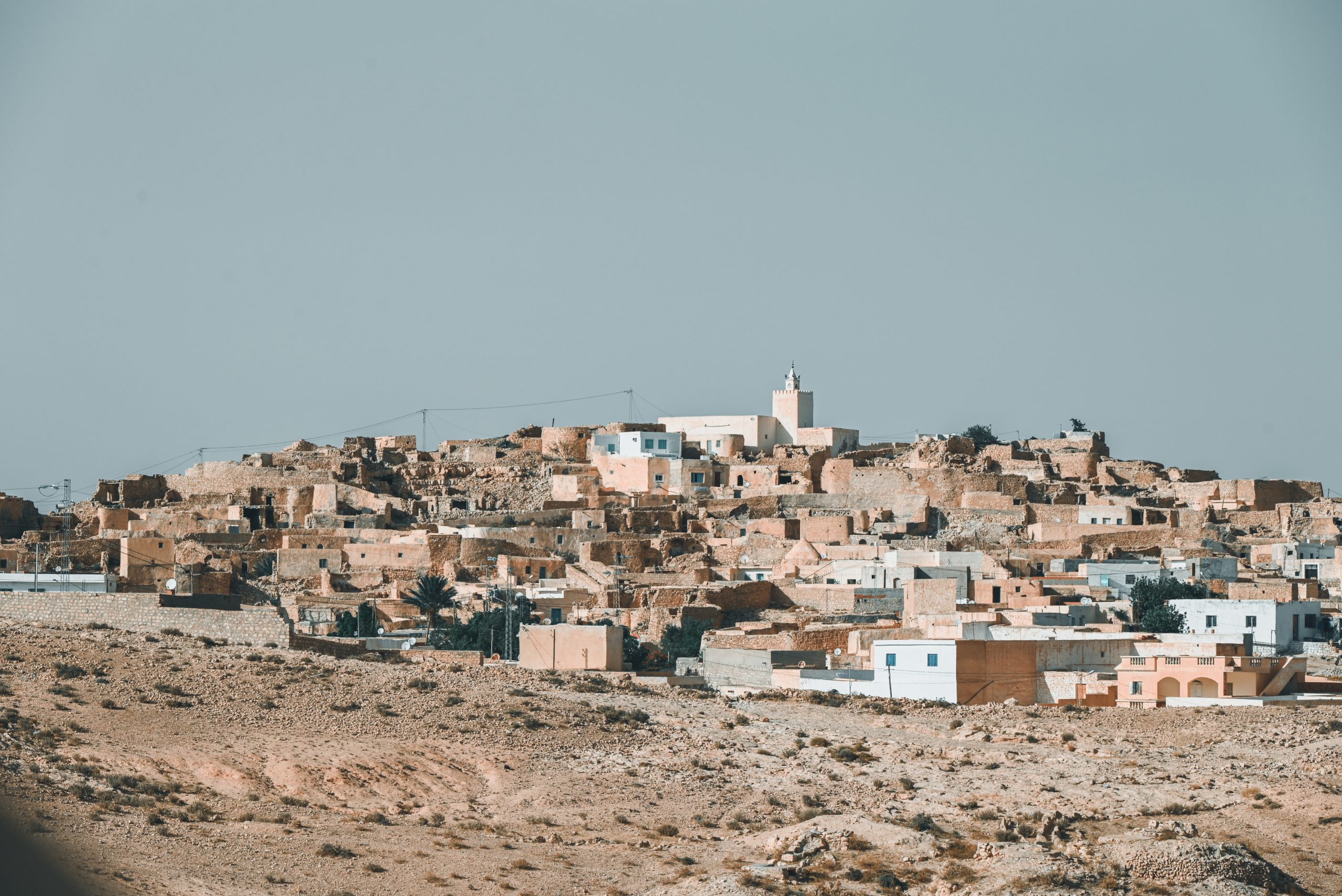
Tamezret, in the heart of Tamazight Tunisia
We hired the car at Monastir airport, that we reached by train from Mahdia, in one hour, and departed for a long 4 hours drive towards the semi-desertic south of Tunisia.
Most of the journey was on the motorway which was practically empty. And so was the road that brought us to Tamezret.
Tamezret is a charming Tamazight Berber village located in the southeast of Tunisia, in the Gabès Governorate.
It’s nestled in the Matmata Mountains and is known for its unique traditional above ground and underground homes, which are carved into the hillside to provide natural insulation against the extreme desert temperatures, reflecting the ingenuity of the Berber people and their adaptation to the harsh climate. Tamezret is a peaceful and picturesque destination, offering visitors a glimpse into traditional Berber life and culture.
As an anthropologist/archaeologist/linguist at heart, I love discovering places like this.


The Tamazight identity
The Tamazight heritage is fast disappearing in Tunisia. Revival movements have been clamped down by the government that feels threatened by anything that it’s not Arabic.
While in Morocco, the Berber/Amazigh communities are thriving and rediscovering their heritage, here it has been wiped out.
The Tamazight language, or shilha, a variant mostly spoken in Tunisia, is classified as a threatened language and is nowadays spoken by only around 50,000 people, however the sources we spoke to (and UNESCO as well) mention 1% of the population, mostly old people.
Until years ago, even giving your child a Berber name was not allowed and today, although the law has been removed, people are afraid of giving the child a Tamazight name, choosing instead the standard Arabic.
First of all the word Tamazight means “Free people” and they are the indigenous population of these lands. They have their traditional dress, music, cooking and the Ibadite religion practiced by the Amazigh of Djerba.


Tamazight culture is quite different from Arab culture, being matriarchal.
The symbolism, expressed in their architecture, their ceramics and especially their weaving is striking and carry exceptional meaning.

The Amazigh associations, created in Tunisia, are now trying to rediscover their history and identity within Tunisian society, to take back their place and their name since they are already an integral part of the national character, assimilated to the Arab identity, which is however foreign to them. The only place where the authentic Amazigh reference has been able to assert itself and persist is tourism.

Especially western tourists looking for exoticism: Matmata and its troglodyte houses, the Berber carpet, Berber couscous, the Berber tent.
But what I looked for mostly was the language, which is essential in preserving one’s identity.
I proudly learnt the Tamazight alphabet and a few words and Tamezret’s little museum guided tour opened a new world of wonders I did not know existed.
Tamezret village
The narrow, twisting streets and stonework of Tamezret highlights the rich cultural heritage of the region and serves as an access point to exploring the stunning desert landscapes and nearby mountains, like we did.
Visitors to the village can experience the traditions and customs that have been passed down through generations, by a vibrant community that celebrates its heritage through various cultural events and festivals.
The local population, primarily composed of Berbers, continues to practice traditional crafts such as weaving and pottery, which are integral parts of their cultural identity.
Have a traditional mint tea at the Café Berbere and learn about the Berbere culture.


Then do pay a visit to the small, but very interesting Berber Museum where you will be shown how people used to live and how each house has an underground network of tunnels that connect to other houses and was used to communicate with each other.
It is incredibly fascinating.


We stayed at the nearby hotel Dar Ayed and it was amazing.
The little bungalows are air-conditioned, clean and quiet. There is a welcoming and refreshing swimming pool, a restaurant on site with traditional delicious food and a view over the rocky desert that is otherworldly.
Totally recommended!


For more Tunisia blog posts; https://blog.worldswithout.net/tunisia/