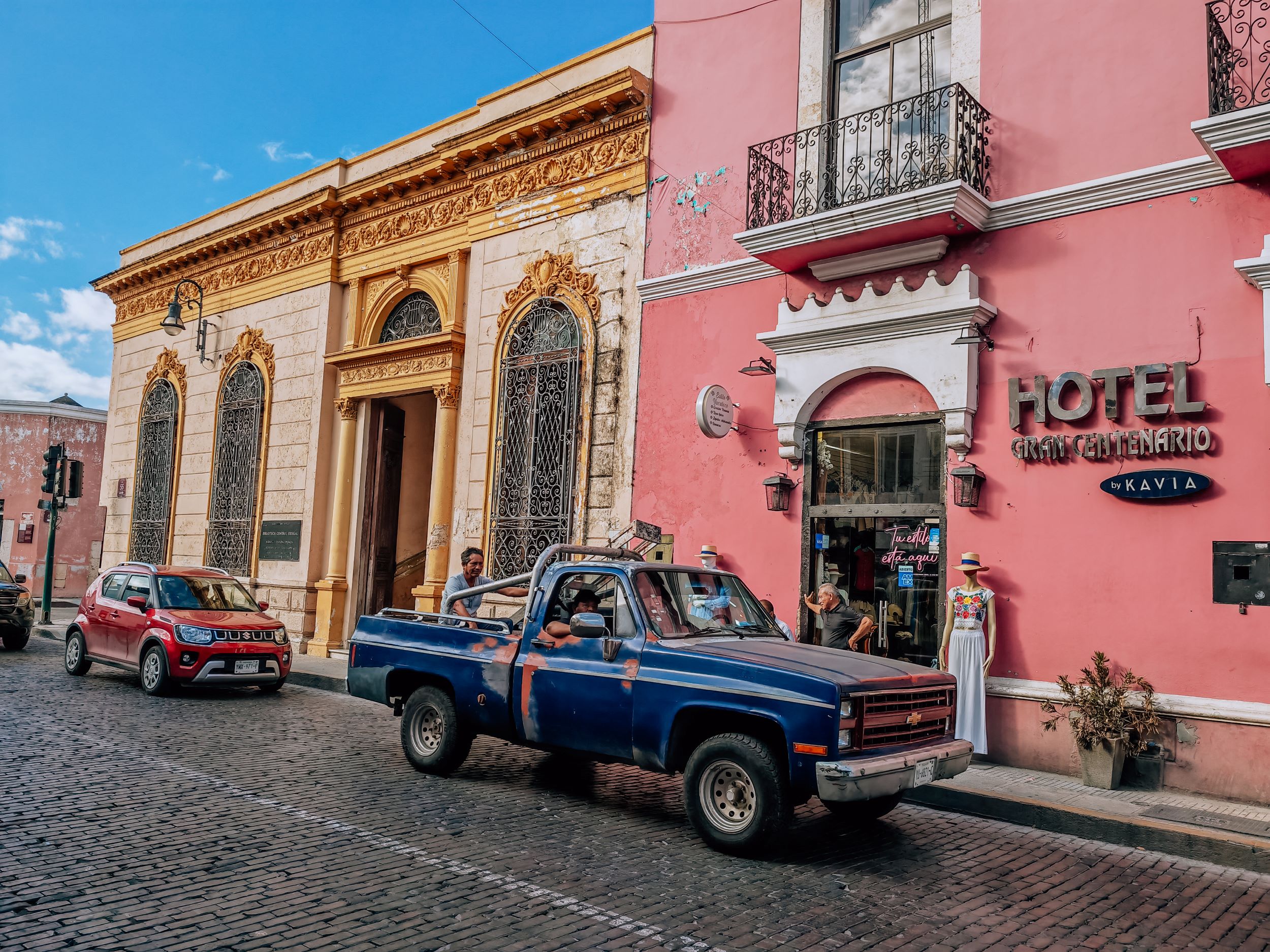
Merida, the safest city in Mexico
When one mentions Merida, the first thing they say is: “ah the safest city in Mexico”.
And it is in fact true.
Even Mexicans themselves, tired of living a life of fear in other cities, moved to Merida to get away from crime.
Merida is the capital of Yucatan and it is a large city with more than one million inhabitants.
In 1542, the conquistador Francisco de Montejo gave the name Mérida to the captured Mayan city T’ho (Tihoo). Established as a base for the Spanish to conquer the Maya, it subsequently became an administrative and commercial centre for the Yucatan region.

In the 19th century, its economy was based on the processing and export of locally grown henequen, a fibrous plant from which twine and rope are produced. By the early 20th century Mérida became one of Mexico’s most important commercial cities, but the henequen trade declined precipitously after World War II. Many former henequen plantations now grow citrus fruits (notably limes and lemons) and other crops.
Today it is still possible to buy some henequen products from local artisans.


Merida
Merida is easy to reach. It has its own international airport or it is reachable by ADO bus or the Tren Maya from Cancun, Valladolid or Campeche.
Merida has a lot of things to offer to the visitor and it seems like there is always something to do.
From lively weekly and daily markets full of fresh produces, textiles and good souvenirs, to nights celebrating Yucatan folklore to Sundays dedicated to bicycle riding, Merida is a family friendly city.


We arrived in Merida the day of the Noche Blanca, a night of free cultural and musical entertainment that lasts all night.
There were several different shows in various parts of the city: concerts, exhibitions, expositions of paintings and photographs, recitals in Mayan language and pop concerts.
Our hotel was located in the south part of the city beside the park San Juan, so we decided to stay local and see what they had to offer. We watched a quite popular Mexican music show, we had food at the Argentinian food stall and I loved the traditional Mayan language concert.
The area may seem a little run down but we loved it and it was completely safe.
We mingled with locals which, hearing me speaking Spanish, were curious to know where I was from.


The next day we walked to the main square, “Plaza Grande”, where a textile and souvenir market was being held. The prices were surprisingly good.
We wandered about the streets which are not as manicured as Valladolid, but they do have their own charm.


The fancier and upmarket area, the Paseo de Montejo, is a wide tree lined boulevard with some stunning buildings.
Easy to realise this must have been the area where the rich Spanish-Mexican families lived as opposed to more popular area, like the south where we were staying, were the poorer Mayan population was living.


Sadly, during our stay, most musea were closed for restructure, but if you can, don’t miss the Gran Museo del Mundo Maya, open 9am to 5pm except Tuesdays when it is closed.
Another not to miss is the Museo Regional de Antropología, Palacio Cantón, open 8am to 5pm except Mondays.

Also look out for the shows, nearly every night, at the Palacio Municipal on the main square.
They are always free and they vary in theme; we watched the Yucatecan night at 8pm, it was lovely and really well done and attended by tourists and locals alike.

Where to eat
There are several options and some really good eateries.
La Chaya Maya- Casona
There are two sister restaurants now; we went to the one beside the park Santa Lucia.
Yes, it is touristic but not a tourist trap. Food was very good and prices were very reasonable.
Plenty of vegan and vegetarian options. And local crafted beer.


Catrin
Yes, this is touristic too, and hyped, but it’s a cool, quirky place, the food was good and so were the prices.
Vegan and vegetarian options and I left satisfied.


2012 Espacios Mayas
This was my personal discovery and a very good one, round the corner from La Chaya Maya Casona.
The décor is beautiful, with Mayan murals nearly resembling a temple. The menu contains several vegan and vegetarian options.
I chose the nopales which are cactus leaves, de-thorned and cooked.
In Sicily, we eat the fruit, which is delicious, but we don’t eat the thick leaves.
It was delightful and I may start a new trend at home!


La Tratto Santa Lucia
If you want a break from Mexican food, this Italian restaurant is quite good.
It is a little fancier and the prices will reflect that but the food was actually not bad, for an Italian to eat pasta abroad.
I took the spinach pasta and the Caballero cocktail which must have been one of the best cocktails of my life!


Tere Cazola
We established a ritual: we did not go back to our hotel without stopping here first and take a couple of slices of those freshly made yummy cakes to take away!
On Calle 62, after the crossing with Calle 65, cheap and great bakery, cream cakes, cheesecakes, cakes and more cakes!
Street food:
there are tortillas and tacos stalls nearly everywhere at rock bottom prices.
Do try the tamales, which are patties made of corn flours and/or cheese and/or meat and wrapped in banana leaves and steamed or roasted.
Also try the marquesitas, a kind of crepes but crispy.


Where to stay
Merida offers a multitude of options to suit every taste and every budget.
We picked this cute and very inexpensive hotel, Hotel Boutique Mansion Lavanda, near the park San Juan.
Although not in the immediate city centre, it’s only 10 minutes’ walk away, in a shop lined, safe area. Taxis and Uber are available and it only cost 40 pesos (£1.50) one way to get to the main square.
The hotel is beautiful, spacious and the swimming pool is stunning.
The rooms were large and clean. We would recommend it.


We used Merida as a base to visit nearby sites and it was very convenient, especially with having our private driver, Oscar, ferrying us about, see separate article on the best driver in Yucatan.
Day trips from Merida
Isla Columpios– a little island in the middle of a mangrove with swings and kayaks. Do check what time is the high tide, because the low tide it’s not fun. They offer packages for two or three hours with or without food.


Sisal –this is the Tulum of the future. A lovely, quaint seaside town on the Gulf of Mexico with colourful architecture and turquoise waters. I really hope it will not be spoilt like Tulum has been.


Celestun– stunning mangrove with abundant wildlife, kayaking and flamingos spotting
Cenotes galore– there are literally dozens of choices, pick some or join a tour. Cenotes are my best memory of Mexico! Homun is a favourite tourist town for cenotes and they look stunning.
I picked the cenotes X’batun and Dzonbacal which are in the same site for a mere 175 pesos and they were amazing, but Yucatan is covered in cenotes, so take your pick.


Mayan ruins- Uxmal was a dream since I was a child and it did deliver. The site is simply incredible, see separate article, and having a guide it leads you to understand more in depth the meaning of each building.
Kabah– another Mayan site that left me breathless. Completely unknown to mass tourism, it is a little jewel nestled in the tropical jungle.


See our other posts on our incredible Mexican adventure with little known cenotes and details on Mayan ruins.