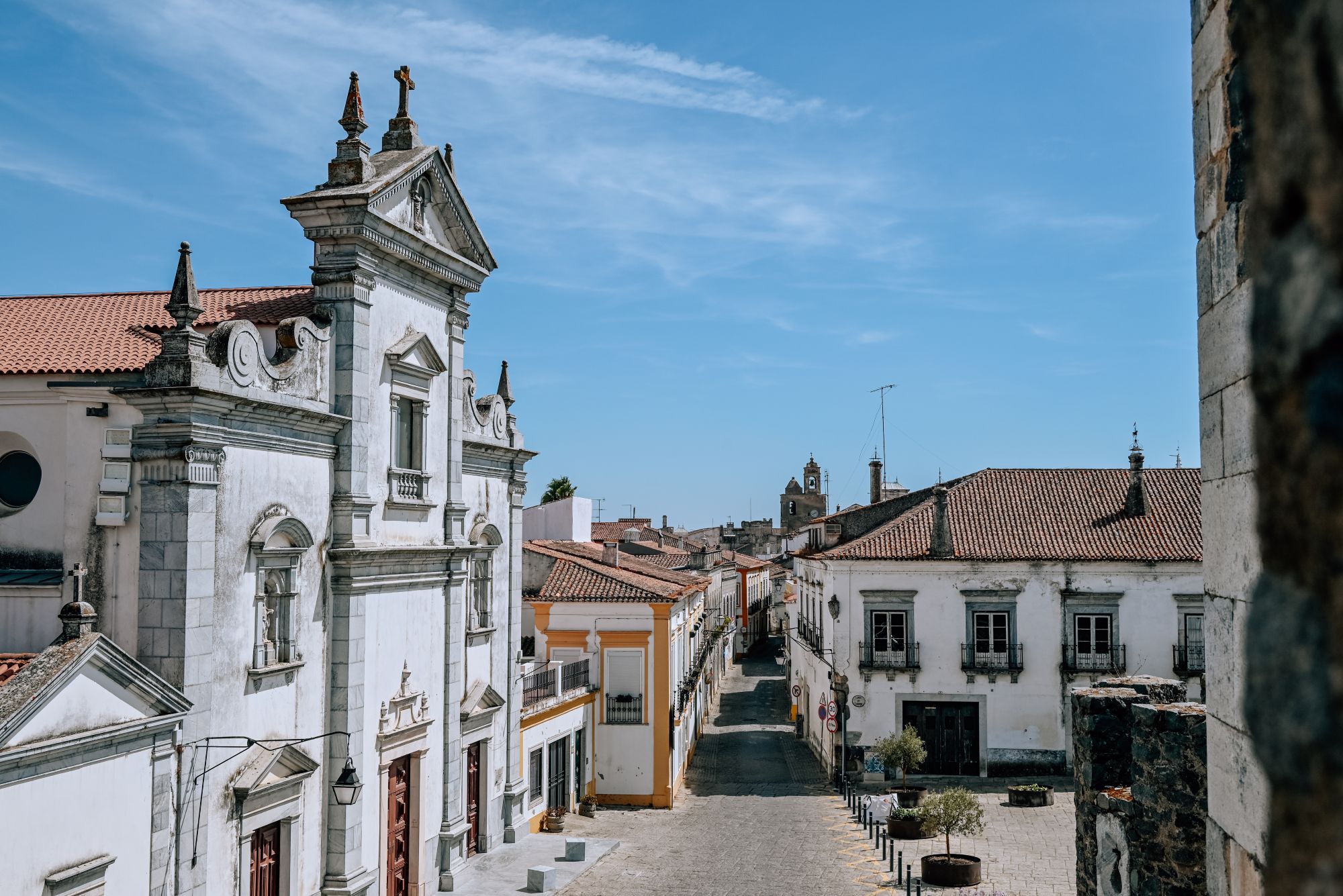
Less explored Algarve: the 5 most charming towns in Northern Algarve
Inland northern Algarve is a world apart from the coastal bustle: forested hills, quiet villages, ancient castles and a deep sense of tradition.
It’s ideal for those travellers seeking authenticity, nature, and cultural depth away from the madding crowds.
This itinerary can be done in a couple of days using any of these towns as a base or you can stay longer and savour the relaxed atmosphere.
We stayed at Monte da Calcadinha. just outside Ourique at a beautiful bungalow with private pool, immersed in the bucolic countryside.


Ourique
The quiet town of Ourique is set in the Beja District, and surrounded by rolling hills, cork oak forests, and olive groves. It’s a great base for exploring the Serra de Monchique to the south or the Serra do Caldeirão to the east. The area is ideal for hiking, birdwatching, and cycling, with trails that pass through quiet hamlets and scenic viewpoints.


Don’t miss the castle of Ourique with enchanting views over the town, especially at sunset.
Food tip: Adega do Monte Velho offers delicious traditional home made food.
Castro Verde
Not far from Ourique, 15 minutes’ drive, Castro Verde is closely tied to the Battle of Ourique (1139), a legendary victory by Portugal’s first king, Afonso Henriques. The Basilica Real de Nossa Senhora da Conceição commemorates this with stunning azulejo panels depicting the battle.

The surrounding plains are ideal for hiking, cycling, and photography, especially in spring when wildflowers bloom.


Beja
Another of Algarve’s most beautiful villages, Beja was once known as Pax Julia, founded by Julius Caesar as a Roman settlement. Later, under Moorish rule, it became a thriving cultural centre.


Today, its skyline is dominated by the Castelo de Beja, whose Torre de Menagem is the tallest keep in Portugal—climb it for sweeping views of the Alentejo plains.
It is about 40 minutes’ drive from Castro Verde.
Serpa
Founded around 400 BC by the Turdelos, Serpa has seen Roman, Moorish, and Christian rule. Its castle, originally Moorish and rebuilt in the 13th century by King Dinis, still stands proudly above the town. The town walls, thick and weathered, reflect centuries of borderland defence, especially during the Spanish invasion of 1707
Don’t miss the Castelo de Serpa that offers panoramic views and a dramatic entrance through a cracked wall.


Aqueduto de Serpa: A striking structure that once supplied water to the town
Museu de Arqueologia: Displays Paleolithic, Roman, and Moorish artifacts
Igreja de Santa Maria & Igreja de São Salvador: Historic churches with quiet beauty
Mertola
Mértola is a hilltop gem in southeastern Alentejo, Portugal—an ancient riverside town where Roman, Moorish, and Christian legacies intertwine.
Mértola sits dramatically above the Guadiana River, once a vital trade route for Phoenicians, Romans and Moors. Its medieval castle, perched on a rocky spur, offers sweeping views and anchors the town’s layered past.

The Igreja Matriz de Mértola, originally a mosque, is one of Portugal’s best-preserved examples of Islamic architecture repurposed for Christian worship.


Get your guide offers tours to Mertola and Northern Algarve, take a look here: Mertola tours
I hope you enjoyed our itinerary; if you are interested in more authentic areas of the Algarve, please have a look at my other posts.
Happy Travels.