Less explored Algarve: Ditch the Crowds- Western Algarve
The Algarve, Portugal’s southernmost region, is often synonymous with golden beaches, busy resorts, and crowded promenades.
However, the Algarve has a lot more to offer the traveller that seeks authenticity, and a deeper connection to place.
Here are a few itineraries that will allow you to discover the real spirit of the Algarve.
This part one will cover Western Algarve, part two will show you the enchanting beauty of the Eastern side and part three the 5 most charming towns on the Northern side.
🌿 Western Algarve
Lagos
We are starting from Lagos town, a vibrant, bohemian, happy place with its ochre cliffs and sea-carved grottoes, especially around Ponta da Piedade, where turquoise waters swirl beneath towering rock formations.


Beaches like Praia do Camilo and Praia Dona Ana offer postcard-perfect views and coves, while Meia Praia stretches wide for long walks and windsurfing.


Ponta da Piedade offers also a stunning setting for magnificent sunset views.

🛶 Adventure and Leisure
From kayaking through sea caves to dolphin-watching tours, Lagos is a hub for outdoor enthusiasts. The marina is a lively spot for boat trips and sunset sails, and the town’s walkable layout makes it easy to explore on foot.

🍷 Culture, Cuisine, and Community
Lagos balances its tourist appeal with a strong local identity. You’ll find family-run tavernas serving cataplana and grilled sardines, alongside international eateries and cozy wine bars. The town hosts art exhibitions, live music, and street festivals year-round, giving it a creative, cosmopolitan energy.
Get your guide offers several tours and many activities here: Lagos tours
Praia da Luz
If you are looking for something more intimate, head to Praia da Luz.
Once a sleepy fishing village, Praia da Luz has grown into a relaxed coastal retreat that still retains its soul. Whitewashed cottages, cobbled lanes, and bougainvillea-draped balconies give it a timeless charm. Unlike the flashier resorts, Luz feels lived-in and loved—by locals and travellers seeking peace.

The beach itself is a crescent of soft sand framed by ochre cliffs and the dramatic Rocha Negra, a volcanic headland that glows at sunset. The waters are calmer here than in nearby surf spots, making it ideal for swimming, paddleboarding, or simply floating under the sun.


Stroll the palm-lined promenade, where cafés spill onto the pavement and the scent of coffee mingles with sea air. The ruins of a Roman bathhouse near the beach hint at Luz’s ancient past, while the coastal path to Lagos offers sweeping views and a chance to spot wildflowers and seabirds.
Food tip: Zazu beach club restaurant-stunning setting overlooking the beach and fabulous food including vegan options.


Praia das Cabanas Velhas
My favourite beach was Praia das Cabanas Velhas, 15 minutes’ drive from Luz but a world away.
It is one of the Algarve’s least crowded beaches. Steep limestone cliffs, coarse sand, and a rugged shoreline give it a raw, untouched feel. The beach stretches about 500–600 meters, narrowing at high tide, and is framed by Mediterranean vegetation and pine-covered hills. It is stunning and basically empty.


Sagres Fortress
Perched on a dramatic headland at the southwestern tip of Portugal, Sagres Fortress (Fortaleza de Sagres) was originally built around 1453 under the direction of Prince Henry the Navigator, a central figure in the Age of Discoveries.
Though many expeditions departed from Lisbon, it was here in Sagres that Henry gathered astronomers, cartographers, and shipbuilders to study the seas and chart new routes.


Sagres is a beautiful spot for fiery sunsets and also known for its strong Atlantic winds, which add to the raw, untamed atmosphere.


Opening hours vary by season, typically from 9:30 AM to 5:30 PM
Cabo de São Vicente
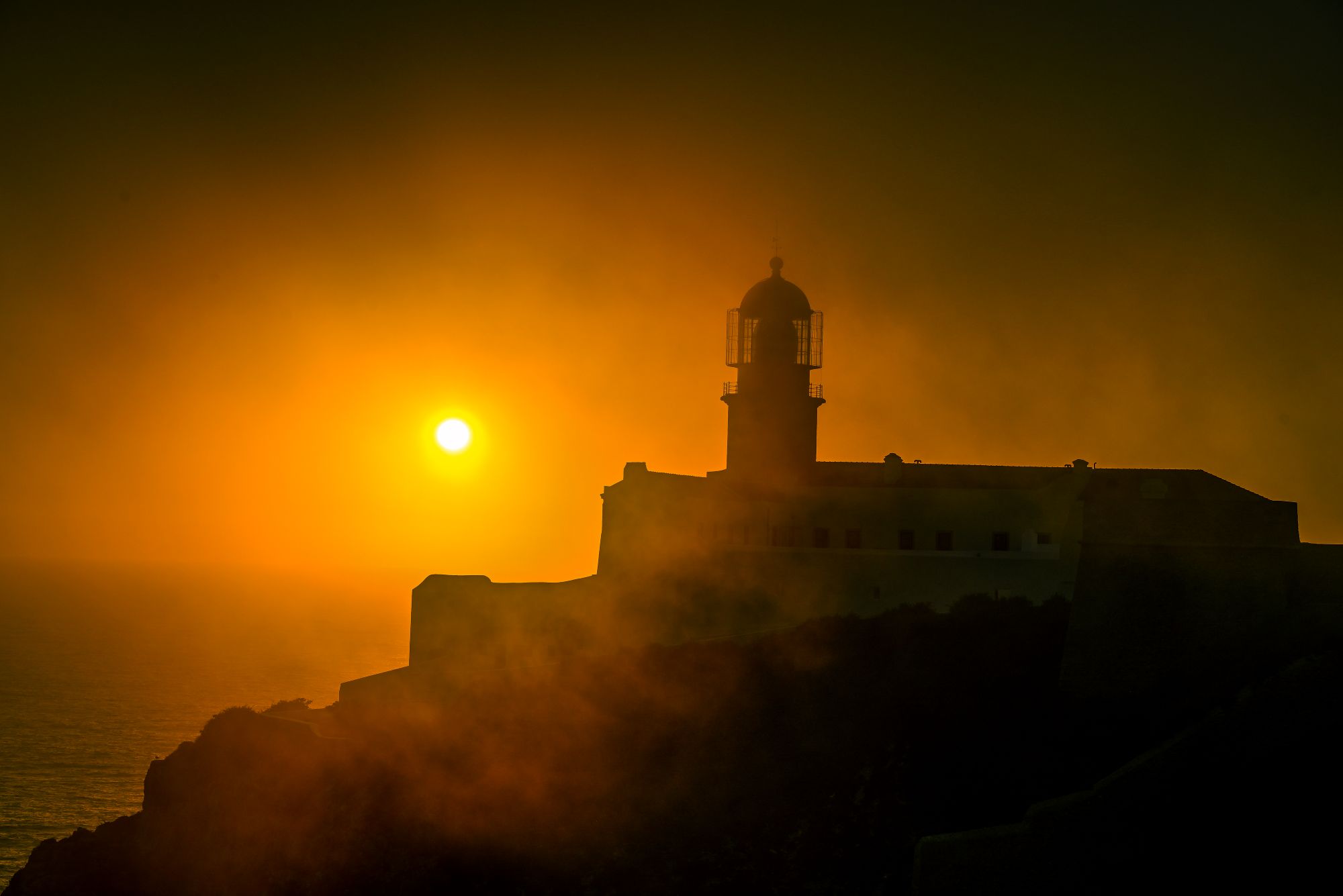
Cabo de São Vicente (Cape St. Vincent) is the south westernmost point of continental Europe.
In the olden days, it was believed to be the edge of the known world and standing atop its 60-metre-high cliffs, with the Atlantic stretching endlessly westward, it’s easy to see why. The cape’s dramatic geography and relentless winds give it a wild, elemental feel that has captivated sailors, mystics, and travellers for centuries.


The fortifications at the cape were originally built in the 16th century and later rebuilt after the devastating 1755 earthquake. Today, visitors can explore the lighthouse, one of the most powerful in Europe, visible up to 60 kilometres out to sea.
It is an incredible setting for sunset! Be warned: it is mighty windy. Dress accordingly.
Odeceixe
Odeceixe sits on the Seixe River, which curls around the village before emptying into the Atlantic at Praia de Odeceixe.
This beach is one of the most unique in Portugal: a horseshoe-shaped bay with a calm river lagoon on one side and surfable waves on the other. It’s a Blue Flag beach, popular with families, kayakers, and surfers alike.


The village itself is a cluster of whitewashed houses with terracotta roofs, perched on a hillside. It’s small but full of charm—cobbled streets, a central square with a stone fountain, and a few cozy cafés and bakeries. The Odeceixe Windmill, dating from 1898, still functions and offers panoramic views from its hilltop terrace.


Silves
The hidden gem of Western Algarve!
Silves was the capital of the Algarve during Moorish rule from the 8th to the 12th century. Back then, it rivalled Granada and Seville in sophistication. Today, its most iconic landmark is the Silves Castle, built from striking red sandstone and considered the best-preserved Islamic military structure in Portugal. The castle’s ramparts offer sweeping views over the town and surrounding countryside.

Adjacent to the castle is the Sé Catedral de Silves, a Gothic cathedral built on the site of a former mosque. Its austere beauty and layered history reflect the town’s religious and cultural transitions.

The town’s cobbled streets, whitewashed houses, and local cafés invite slow wandering. The Municipal Market is a great spot to sample regional produce, especially citrus and honey.


Silves hosts the Medieval Festival each August, transforming the town into a lively reenactment of its Moorish-Christian past with costumed parades, falconry, and open-air feasts.
If you rather not hire a car, Get your Guide offers tours from many parts of the Algarve here: Silves tours
I hope you enjoyed this itinerary.
If you wish to explore further afield in the Algarve, take a look at my other Algarve posts.
Happy travels.