Less explored Algarve: Ditch the Crowds- Eastern Algarve
The Eastern Algarve is Portugal’s gentler, more traditional coast—where salt flats shimmer, fishing boats bob in quiet harbours, and time slows to the rhythm of the tides.
It’s ideal for travellers seeking authenticity, nature, and a more local experience.
🕰️ Why Go East?
The Eastern Algarve is less developed than the central and western coasts. You’ll find fewer resorts, more locals, and a slower pace of life. It’s a region where fishermen still mend nets by hand, and town squares buzz with conversation instead of tour groups.
It is an enchanting, relaxing side of the Algarve with a lot to offer to those trying to find a quieter and traditional experience.
The defining feature of the Eastern Algarve is the Ria Formosa Natural Park, a 60-kilometre stretch of barrier islands, salt marshes, and tidal lagoons. This biodiverse haven is home to flamingos, chameleons, and traditional salt harvesting.
Tavira
Often called the Algarve’s most beautiful town, Tavira is a blend of Moorish architecture, Roman bridges, and baroque churches. Its riverside charm and cultural depth make it a favourite for lingering travellers.

Tavira’s charm lies in its preserved architecture and layered history. The Gilão River flows through the heart of town, crossed by a seven-arched Roman bridge that’s become its symbol. The town boasts over 30 churches, including the Igreja da Misericórdia with its Renaissance façade and azulejo-covered interior.


Above the town, the Castle of Tavira offers panoramic views and a peaceful garden.
The town hosts music festivals, craft fairs, and evening markets, creating a lively yet laid-back vibe.
Get your guide has tours and activities to Tavira here: Tavira tours


Its restaurants and cafés line the riverbanks and plazas, perfect for slow meals and sunset views.
Food tip: Come na Gaveta, charming restaurant with delicious vegan options.
And Fabrica do Avo with great vegan ice cream!

Cacela Velha
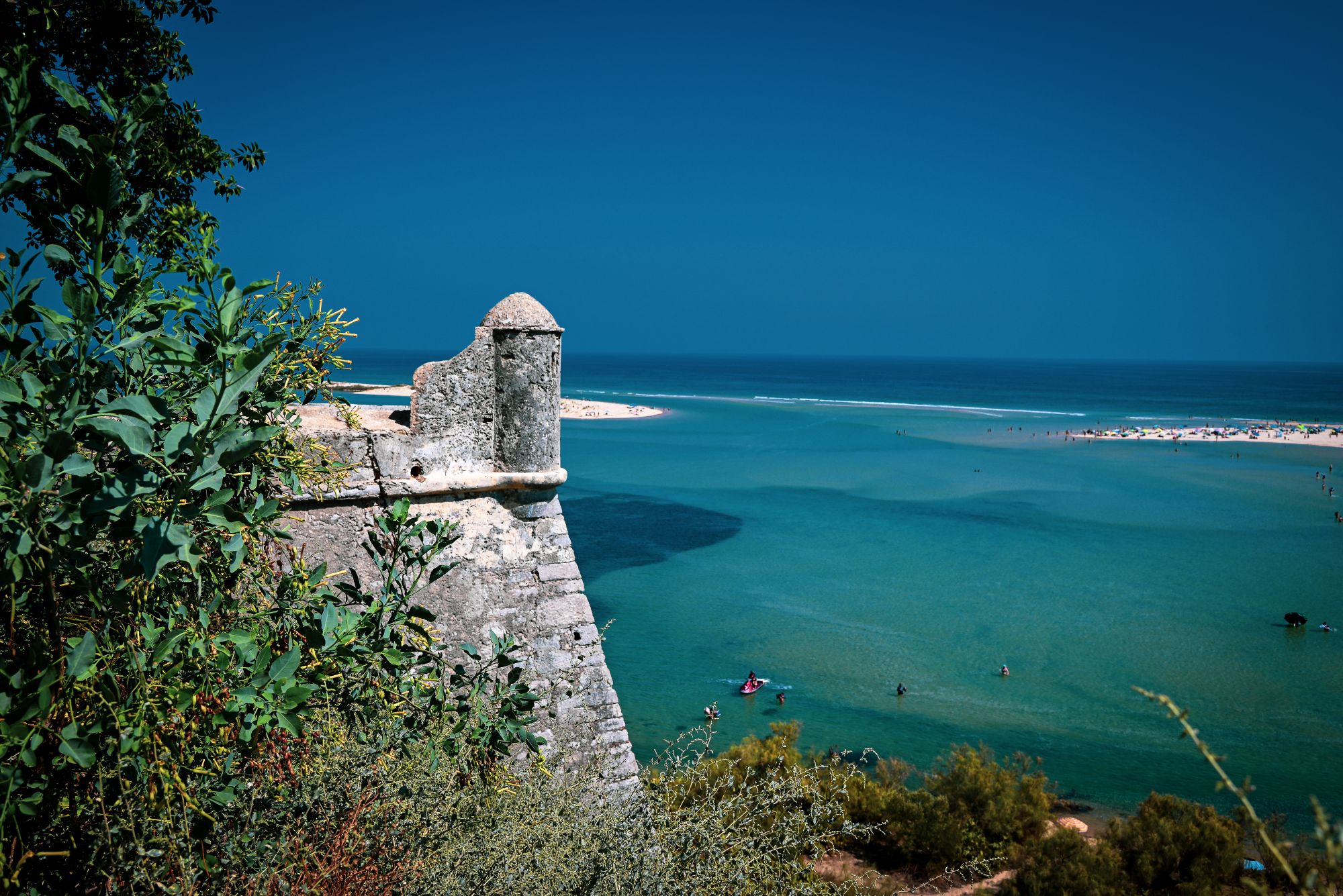
A tiny whitewashed village perched above the sea, offering panoramic views and a timeless atmosphere. Its beach, Praia da Fábrica, is often ranked among Europe’s best.
It was definitely my most favourite beach of the whole trip, not just because it is so beautiful but because getting there, and back, it’s an adventure!

Being tidal, it exposes or floods according to the tide patterns. When we arrived in the morning, there were huge sandbanks that were easy to reach on foot. However, as the day went by, especially after midday, we noticed the tide rising up.

It is just magical to observe how the scenery changes so dramatically in the space of hours and at times, minutes!
When we decided to walk back to the mainland, we had to cross with water reaching already above our waist.

It was fun, particularly holding my bag and my camera up on my head to avoid water damage, but if you have children or you don’t want to do that, don’t worry, there are boats ready to bring you safely to the mainland.


Ilha da Armona
One of our favourite experiences.
Ilha da Armona is part of the Ria Formosa Natural Park, a protected lagoon system known for its biodiversity and shifting sandbanks. The island is about 9 km long and 1 km wide, with no cars, no hotels (but there are rental houses and accommodations) and a laid-back vibe that feels worlds away from the mainland.
Despite its “desert island” reputation, Armona has a small settlement with cafés, restaurants, and summer cottages, many built in the 1970s and now used as holiday homes.


🚤 Getting There
- Access: By ferry from Olhão, running every 1–2 hours depending on the season. The ride takes about 15–30 minutes.
- Arrival: Ferries dock at the southern end of the island, near the main settlement. From there, it’s a 15-minute walk to the ocean-facing beach.
🏖️ Beaches and Nature
There two amazing sides to the island:
- Praia da Armona: A long stretch of white sand and turquoise water, ideal for swimming, sunbathing, and walking. The beach is calm and shallow, making it great for families.
- Wild side: The further you walk from the ferry dock, the quieter and more untouched the beach becomes. Expect sand dunes, shells, and birdlife.

We reached the island from the mainland through a relaxed kayaking trip. It takes about 30 to 40 minutes each way and it is a gorgeous way to absorb the quietude of the lagoon and the beauty of its scenery.
We went through Roots kayak Rentals and Tours and Kurt and his dog Spike will certainly plan an incredible adventure for you. Totally recommended if you want to explore the Ria Formosa national park and discover more about the area. Kurt is very knowledgeable and passionate about conservation and the environment.
You can find them at: www.rootskayak.com


Palácio de Estoi
A well-hidden gem, it is located just 10 km north of Faro, the Palácio de Estoi was originally commissioned in 1782 but underwent major reconstruction in the late 19th and early 20th centuries, culminating in its final form around 1909. The palace blends rococo, baroque, neoclassical, and art nouveau styles, with its rococo elements most prominent—earning it the nickname “Pink Palace”.

The palace’s formal gardens are a highlight, laid out in symmetrical patterns with azulejos, stone benches, and mythological sculptures. They offer panoramic views of the surrounding countryside and are ideal for a quiet stroll or photography.


After years of neglect, the palace was restored and converted into a luxury pousada (historic hotel) in the early 2000s. While the public can visit the gardens and some interior spaces, staying overnight offers access to private salons, courtyards, and fine dining in a regal setting.
I hope you enjoyed our itinenary and if you are interested in the more traditional, quiter side of the Algarve, see my other blog posts.