Chengde Travel Guide: Imperial Retreats and Sacred Temples
Chengde is a treasure trove of imperial history, Tibetan-style temples, and sweeping grasslands, perfect for a blend of cultural insight and visual storytelling.
Just 225 km northeast of Beijing, Chengde , not to be confused with Chengdu, offers a refreshing retreat from the capital’s bustle. Once the Qing dynasty’s summer playground, this city is a tapestry of imperial gardens, sacred temples, and rugged landscapes that whisper centuries of history.

What not to miss in Chengde
The Chengde Mountain Resort: Imperial Grandeur in Nature’s Embrace
Built in 1703 by Emperor Kangxi, the Chengde Mountain Resort is China’s largest imperial garden and a UNESCO World Heritage Site and it blends palatial architecture with lakes, forests, and rolling hills.
Here’s the numbers:
Built between 1703 and 1792 during the Qing Dynasty, it took 89 years to complete.
It covers 5.64 million square meters—twice the size of Monaco!
It is divided into four main zones: Palace Area, Lake Area, Plain Area, and Mountain Area and surrounded by 10 km of outer walls, with over 120 buildings, 90 pavilions, and 29 bridges.

🏰 Palace Area is located in the southern section and it was modelled after the Forbidden City in Beijing. The main palace, now a museum, houses 30,000+ relics, including imperial texts and ceremonial items.
Yanbozhishuang Hall was the emperor’s summer residence; Kangxi spent 12 summers here, Qianlong 52.


🌊 The Lake Area: it was inspired by southern Chinese gardens, especially West Lake in Hangzhou. Don’t miss Shuixin Pavilions that appear to float on water, framed by lotus blooms and archways.
Boating available: Electric and paddle boats offer scenic rides through the lakes; it was a very relaxing and pleasant activity. 30 minutes it costs 140 RMB.


🕰️ Opening Hours by Season
- April 1 – April 30: 07:30 – 17:30
- May 1 – October 9: 07:00 – 18:00
- October 10 – March 31: 08:00 – 17:30
Eight Outer Temples: A Spiritual Mosaic
Surrounding the resort are the Eight Outer Temples, built between 1713 and 1780 to honour ethnic harmony and religious diversity. These Tibetan-style temples reflect Qing diplomacy and devotion.
At least two of them are unmissable:
Putuo Zongcheng Temple (Little Potala Palace)—a towering tribute to Tibetan architecture
Puning Temple—home to the world’s tallest wooden Guanyin statue
Putuo Zongcheng Temple
🧭 Historical Origins
- Built between 1767 and 1771 by order of Emperor Qianlong, the temple commemorated his 60th birthday and his mother’s 80th.
- It was designed to mirror the Potala Palace in Lhasa, symbolizing Qing devotion to Tibetan Buddhism and their political ties with Tibet.
- The name “Putuo Zongcheng” is a transliteration of “Potala,” reinforcing its spiritual and architectural homage.

The temple spans 220,000 square meters and it’s one of China’s largest temple complexes.
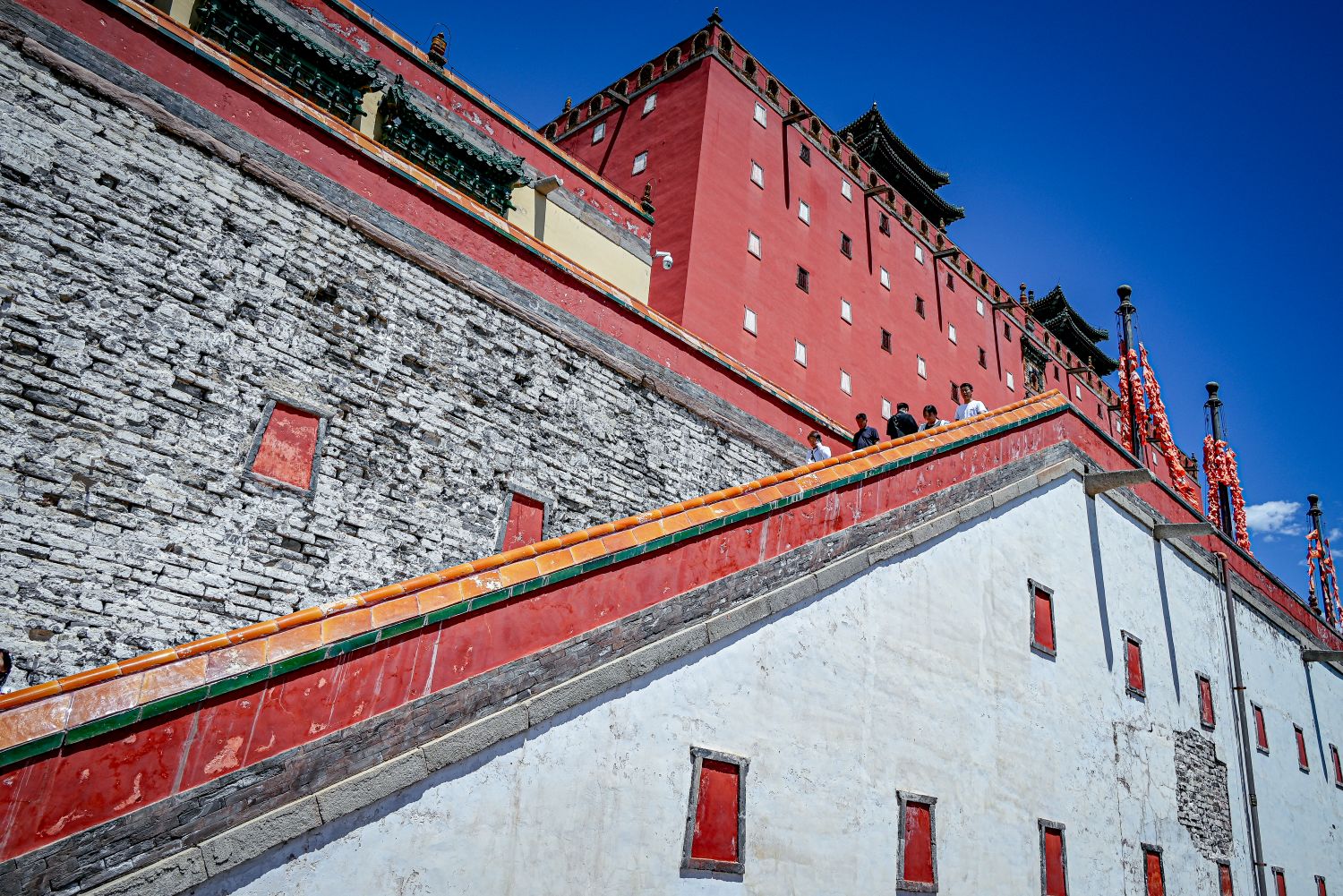
The layout rises in tiers along the mountainside, blending Tibetan fortress-like design with Chinese symmetry and ornamentation.

There is a Mountain Gate, a blend of Tibetan fortifications and Han-style towers, guarded by stone lions, Red Terrace (Dahongtai), the temple’s dramatic centrepiece, crowned by the Wanfaguiyi Hall with gilded copper tiles and a Tibetan-style pagoda spire.
Over 30 flat-roofed towers used for monk quarters, worship halls, and decorative stupas.
It is an absolute marvel.


Opening Hours:
- May–Oct: 08:00–18:00 (last entry 17:10)
- Nov–Mar: 08:30–17:00 (last entry 16:10)
- Best Time to Visit: Autumn (Sept–Nov) for crisp air and golden light
- Getting There:
- From Chengde Railway Station, take bus No. 2, 5, or 15, or a short taxi ride (~3 km)
Puning temple: The Temple of Universal Peace
🧭 Historical Origins
- Built in 1755 by Emperor Qianlong to commemorate the Qing victory over the Dzungar Mongols and promote ethnic harmony.
- Modelled after Samye Monastery in Tibet, it reflects Qing devotion to Tibetan Buddhism and diplomacy with Mongolian and Tibetan leaders.
- Part of Chengde’s Eight Outer Temples, it was designed to showcase Qing imperial benevolence and religious inclusivity.

The temple spans 23,000 square meters, with a layout that blends Han Chinese and Tibetan styles. The front section features Han-style halls like the Hall of Heavenly Kings and Mahavira Hall, showcasing traditional Chinese symmetry.
The rear section includes Tibetan-style Mahayana Pavilion, white-walled and red-roofed, rising in tiers like a fortress.

The temple’s crown jewel is a 22.28-meter-tall wooden statue of Avalokiteśvara (Guanyin), carved from five types of wood. Depicted with 1,000 arms and 1,000 eyes, symbolizing infinite compassion and omnipresent wisdom. It’s the largest wooden Buddhist statue in China.


Opening Hours:
- April–Oct: 08:00–18:00 (last entry 17:10)
- Nov–Mar: 08:30–17:00 (last entry 16:10)
Getting There:
- Take Bus 6, 15, or 26 from Chengde city centre
- Or a short taxi ride (~3 km) from Chengde Railway Station
If you still have time, we sadly did not, head out towards the countryside which is supposed to be extraordinary beautiful.
Bashang Grasslands: Nature’s Canvas
Head to the Mulan Paddock in the Bashang Grasslands. Once a royal hunting ground, it now offers horseback riding, yurt stays, and wildflower-dotted meadows.
- Best time to visit: July–August for cool breezes and vibrant blooms
- Activities: Horseback riding, photography, and local performances
Jinshanling Great Wall: Hike Through History
Located between Chengde and Beijing, Jinshanling is one of the most photogenic and least crowded sections of the Great Wall. With 67 watchtowers and dramatic mountain views, it’s a dream for hikers and shutterbugs alike.
🚆 Getting To Chengde
- By train: High-speed trains from Beijing Chaoyang Station to Chengde South take ~1 hour
- By car: A scenic 3-hour drive from Beijing
- Organised tours: take a look at Trip which provides a large number of different tours, some from Beijing: https://www.trip.com/things-to-do/list?pagetype=city&keyword=&id=135&name=&pshowcode=&kwdfrom=srch&citytype=dt&locale=en-XX&curr=GBP&Allianceid=6699351&SID=237721457&trip_sub1=&trip_sub3=D4472393
Transport within the city:
Buses and DIDI are readily available and very inexpensive
China has a lot to offer; browse our itinerary here: https://blog.worldswithout.net/asia/china/