
Borgarnes and Beyond: A Journey Through Iceland’s Western Charms
Iceland is an amazing country and a photographer’s paradise. And Borgarnes is a perfect starting point.
Nestled on a scenic peninsula along Borgarfjörður, just over an hour’s drive from Reykjavík, Borgarnes is more than a pit stop, it’s a poetic prelude to the wild heart of West Iceland. With its blend of Viking history, geothermal serenity, and dramatic natural beauty, this small town of around 2,000 residents invites travellers to slow down and sink into Iceland’s quieter rhythms.
Borgarnes is steeped in the sagas. The Settlement Centre Museum offers immersive exhibits on Egil’s Saga and Iceland’s early settlers, making it a must-visit for history lovers. Nearby, Skallagrímsgarður Park honours the saga’s hero with serene walking paths and views of the fjord.
The town’s charm lies in its simplicity—colourful houses, cozy cafés, and a shoreline that shifts with the light. Don’t miss Bjössaróló, a whimsical playground built from recycled materials, reflecting Iceland’s creative spirit.

🚗 Getting There and Staying
Located along Iceland’s Ring Road, Borgarnes is easily accessible by car. The drive from Reykjavík includes the scenic Hvalfjörður Tunnel and the second-longest bridge in Iceland, skimming the fjord’s surface.

Accommodations range from boutique guesthouses to family-run hotels. Many offer fjord views, hearty breakfasts, and warm Icelandic hospitality.
We stayed at Englendingavík, a charming restaurant and guesthouse housed in a historic building by the sea, serving local food. Local bakeries and cafés offer skyr-based treats and strong coffee—perfect for fuelling your adventures.
We slept soundly and woke up refreshed, ready for a day of driving adventure.
Here is the link to the accomodation: Englendingavík Homestay

Ytri Tunga
Our first stop was at Ytri Tunga, an enchanting wind swept beach with seal-watching spots, located on the southern coast of the Snæfellsnes Peninsula. Unlike Iceland’s typical black sand beaches, Ytri Tunga features golden sands and gentle surf, making it a serene and accessible destination for wildlife lovers and photographers.
However, we travelled late September and no seals on sight that day.

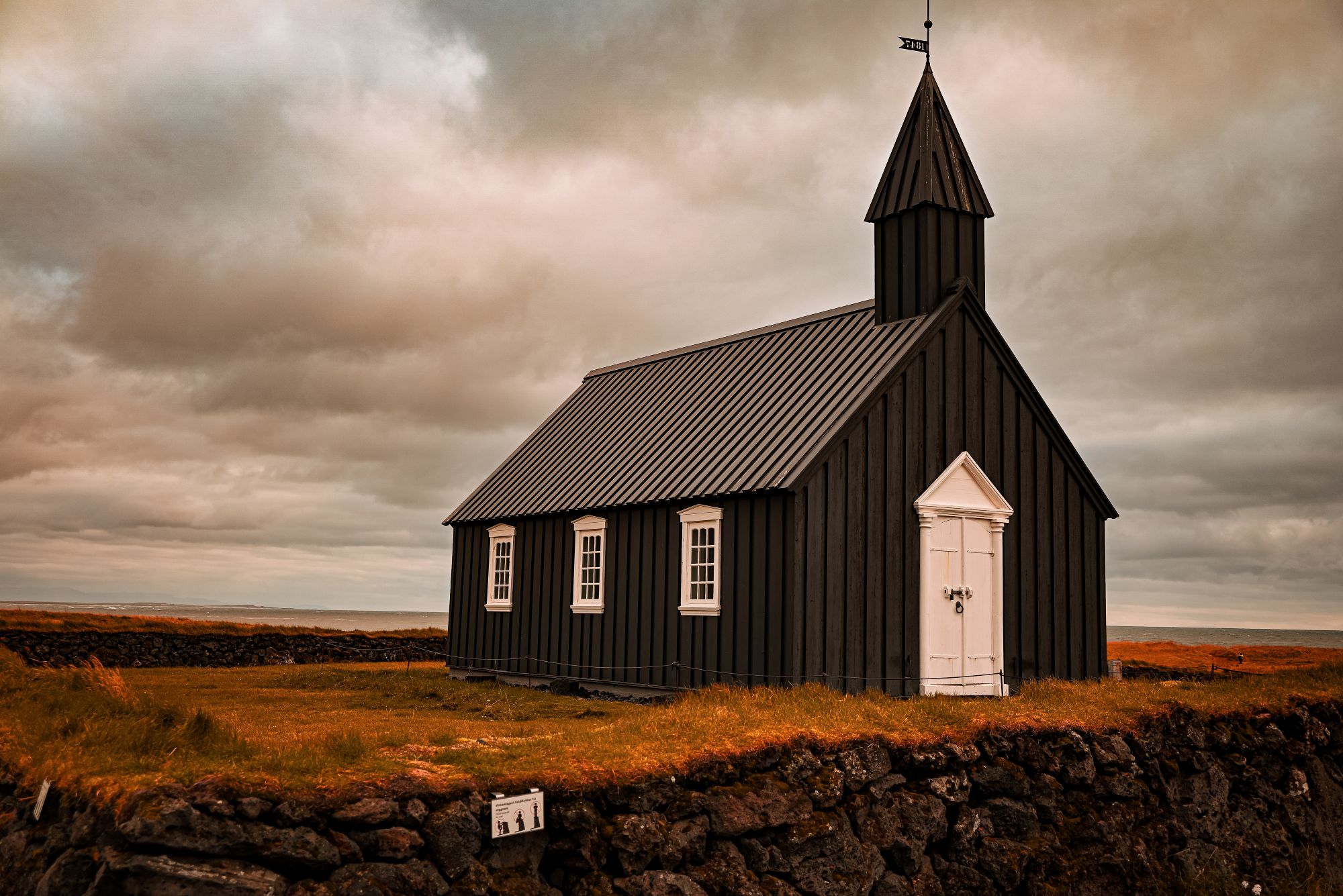
We continued on to the Black Church of Búðir (Búðakirkja)
This minimalist black wooden church, framed by wild grasses and volcanic rock, is one of Iceland’s most photographed landmarks. Originally built in the 19th century and reconstructed in 1987, it stands as a stark, elegant contrast to the surrounding lava fields and the often moody skies. Its simplicity and isolation evoke a deep spiritual resonance, capturing the interplay of light and shadow.


🌋 Búðahraun Lava Field and Búðaklettur Crater
Búðir lies within the Búðahraun lava field, a moss-draped expanse formed by the Búðaklettur crater. This 88-meter-high volcanic cone still looms over the area, and its lava once flowed all the way to the sea. The terrain is otherworldly—twisted rock formations, windswept grasses, and the occasional glimpse of Arctic foxes or seabirds.

Kirkjufellsfoss
Next stop, the enchanting Kirkjufellsfoss, one of Iceland’s most iconic waterfalls, famed for its perfect alignment with the uniquely shaped Kirkjufell mountain; it will leave you wondering if you have just stepped in “Lord of the Rings”
Located just outside the fishing village of Grundarfjörður on the northern coast of the Snæfellsnes Peninsula, Kirkjufellsfoss is easily accessible and a must-stop on any West Iceland itinerary. The waterfall itself is modest in height but cascades in three elegant tiers, offering a foreground to the dramatic, steeple-shaped Kirkjufell (“Church Mountain”), often dubbed the most photographed mountain in Iceland


📸 A Photographer’s Dream
The pairing of Kirkjufellsfoss and Kirkjufell is a favorite among landscape photographers, especially during:
- Sunset and sunrise, when the sky ignites behind the mountain.
- Winter, when the aurora borealis dances above the icy falls.
- Autumn, when golden grasses frame the scene in warm hues.
The site gained global fame after appearing in Game of Thrones as “Arrowhead Mountain,” further boosting its mythical allure.


🚶♂️ Visiting Tips
- Accessibility: A short walk from the roadside parking area leads to the falls. The path is well-marked and suitable for most visitors.
We then crossed the Kolgrafarfjörður bridge and made our way back to Borgarnes.


As with everywhere in Iceland, do check the weather forecast before setting out as Icelandic weather can be very unpredictable and at times not safe.
Do not stop on the road to take photos, but look for lay-bys and use caution at all times.
For those who prefer not to hire a car, there are tours available from Reykjavik : Western Iceland tour
Safe travels.

31 responses to “Borgarnes and Beyond: A Journey Through Iceland’s Western Charms”